Why Your Recycling Routine Breaks the Moment You Cross a State Line
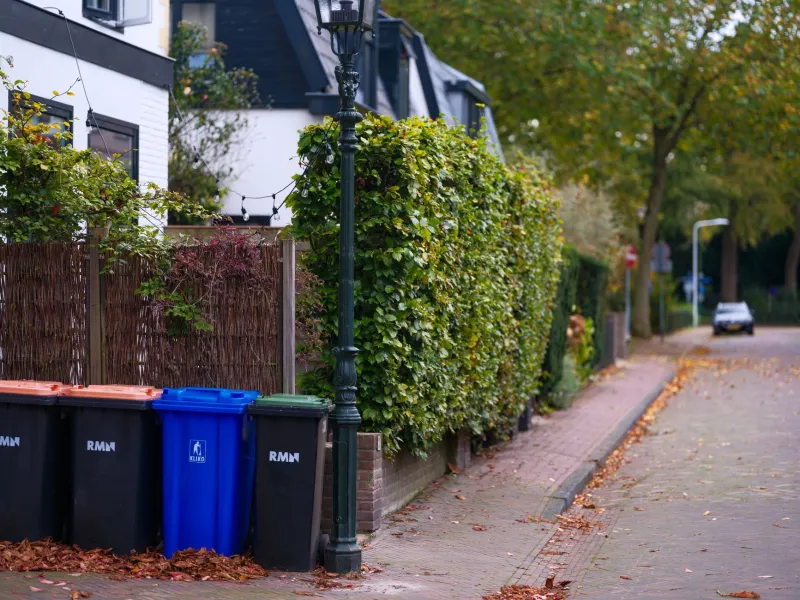
You've had the same routine for years. Rinse the jug, flatten the cardboard, toss the tub in the bin. Then you visit your cousin in Portland, or you retire to Arizona, or your company transfers you from Michigan to Texas — and suddenly half the stuff you carefully sorted ends up in the landfill truck. What gives?
Recycling in America isn't one system. It's roughly 10,000 local systems wearing a trench coat, stitched together from state laws, county ordinances, and the business decisions of whichever material recovery facility serves your ZIP code. Understanding the seams is the first step to recycling right wherever you land.
The Bottle Bill Divide
Start with the most visible split: container deposit laws. Exactly ten states — California, Connecticut, Hawaii, Iowa, Maine, Massachusetts, Michigan, New York, Oregon, and Vermont — charge a nickel to a dime deposit on certain beverage containers, refundable when you return them to a retailer or redemption center.
Live in one of those states and tossing a can in the bin literally throws money away. Live anywhere else, and that same can has no cash value beyond its scrap aluminum worth. This is the single biggest reason recycling habits don't transfer. A Michigander who moves to Ohio will keep hoarding cans out of pure muscle memory, while a Texan visiting Michigan might not realize that the 10-cent deposit on their beer can is worth claiming.
Oregon and California have taken it further with dedicated bottle drop centers, and some states have expanded deposits to wine bottles and juice containers while others still limit them to beer and soda. There's no national standard, and honestly, there's no sign one is coming soon.
California Composts. Most of the Country Doesn't.
Then there's organic waste. California's SB 1383 requires most residents and businesses to separate food scraps into a green waste stream — one of the broadest mandates in the country. Vermont has a similar phased-in food scrap ban. Seattle, San Francisco, Denver, New York City, and a growing list of others offer curbside compost collection, but in most of the South and Midwest, food waste goes straight in the trash because there's simply no infrastructure to process it.
If you move from San Francisco to Atlanta, your counter-top compost pail has nowhere to go unless you find a private service or a community garden drop-off. That's not you failing at sustainability; that's a gap in the local system.
Why Your Neighbor Two Towns Over Recycles Differently
Here's the part that drives everyone crazy: recycling rules can change between municipalities that share a school district. The reason usually comes down to economics and contracts.
- End markets. A town near a plastics reprocessing plant can accept plastics #3–#7. A town trucking its recyclables 200 miles to a facility that only wants #1 and #2 will say no to the rest.
- Processing contracts. Municipalities bid out their recycling service. Whatever equipment the winning facility owns determines the accepted list.
- Contamination history. Some towns tightened their rules after one too many loads got rejected for being full of plastic bags and tanglers.
- Single-stream vs. dual-stream. Communities with older dual-stream programs still separate glass at the curb, which is why glass recycling survives in some places and quietly died in others.
So yes, it's genuinely possible that your sister in the next county can recycle pizza boxes and you can't. Check your local hauler's or public works department's accepted-materials list rather than guessing.
A Quick-Reference for Movers, Snowbirds, and Road-Trippers
Bottle bill states (deposit on containers): CA, CT, HI, IA, ME, MA, MI, NY, OR, VT. Note that Michigan's deposit is 10 cents — the highest in the nation.
Mandatory food scrap separation (statewide or major cities): California, Vermont, plus cities like Seattle, NYC, Denver, and Portland, Maine.
Plastic bag bans with reuse expectations: California, New York, New Jersey, Oregon, and others. Bring your own bags or pay per bag at checkout in many of these states.
E-waste laws (manufacturer-funded electronics recycling): Roughly half the states, including Washington, New York, Texas, Illinois, and Colorado, though the details — who pays, what's covered — vary a lot.
Traveler tip: If you're spending a month in a bottle bill state as a snowbird, that's real money accumulating. Ask your rental host or a local redemption center where the nearest drop-off is. In Oregon, the BottleDrop network makes it painless.
Mover tip: Before your first curbside pickup in a new home, look up the municipality's recycling page. Don't assume your old list of accepted items carries over — it almost never does.
The Bottom Line
Recycling rules aren't arbitrary; they're the visible output of local markets, contracts, and legislation. The frustration of a broken routine usually means the rules underneath it changed, not that recycling stopped mattering. Learn the lay of the land, adjust your sorting, and when in doubt, use our directory to find the drop-off center nearest you — wherever "near" happens to be this year.