Stop Leaving Money on the Scale: An Insider's Guide to Dealing With Your Local Scrap Yard
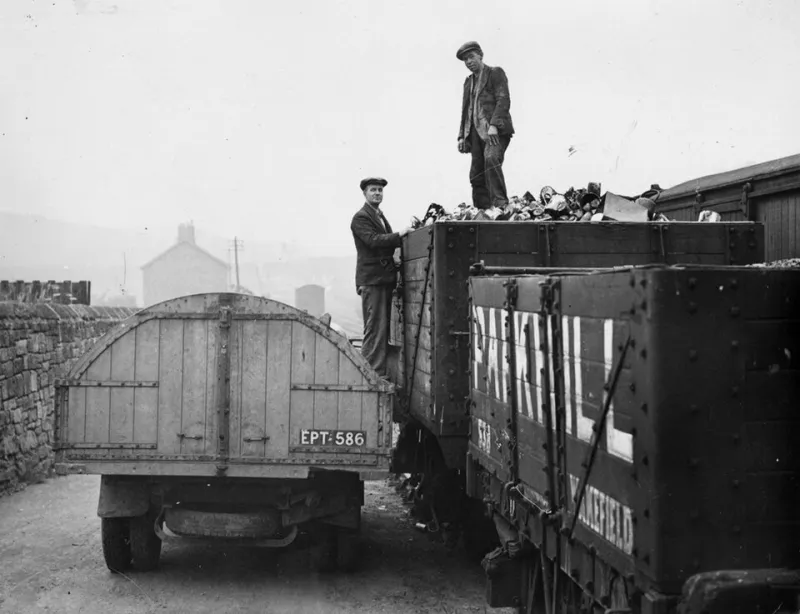
Photo: Tyne & Wear Archives & Museums, No restrictions, via Wikimedia Commons
Let's be blunt: most people who show up at a scrap yard for the first time lose money. Not because the yard is crooked — most aren't — but because they show up with an unsorted truck bed, no idea what their brass is worth, and no leverage. The good news? The fix is mostly homework, and we talked to enough operators to know what they actually wish you knew.
Sort Before You Roll In
The number one mistake, according to just about every yard operator alive: showing up with a mixed load. When everything's jumbled together, the yard grades your whole load at the lowest common rate.
Spend an hour separating before you go:
- Copper — bare bright wire pays the most; insulated wire, pipes, and roofing copper pay progressively less
- Brass — plumbing fittings, keys, shell casings
- Aluminum — cans (separate!), window frames, cast lawn furniture
- Steel — appliances, fence posts, the big heavy stuff that pays little per pound but adds up fast
- Electronics — many yards take e-scrap, but circuit boards, motors, and power supplies each get graded differently
A magnet is your best sorting tool. Sticks to it? Steel. Doesn't? Non-ferrous, and probably worth real money. Keep those two categories apart at minimum, and you're already ahead of 80% of first-timers.
Learn to Read the Board
Scrap prices move daily with commodities markets — copper tracks the London Metal Exchange, and everything else follows. Reputable yards post their prices at the scale house or on their website, updated each morning.
Before you go, check the going rate for copper and aluminum online so you have a ballpark. If the posted price seems wildly out of line, ask. Prices for #1 bare bright copper can swing meaningfully week to week, and knowing the trend keeps you from accepting a lowball on a bad-hunch day.
Also learn the grades. "Copper" isn't one price — it's a ladder from bare bright at the top down to insulated wire at the bottom. If the yard calls your clean pipe "insulated wire" pricing, push back politely and ask them to show you the grading.
The Weighing Game: Legit vs. Sketchy
Legit yards use certified scales, and most states require periodic inspection — you can usually spot a certification sticker near the readout. Watch your numbers on every transaction: weight in, weight out, tare weight of your vehicle.
Watch out for these classic moves at less scrupulous operations:
- Rounding down weight by a couple pounds here and there
- "Downgrading" your clean copper to a cheaper grade
- The tare trick — forgetting to subtract your truck's weight on the outbound weigh
- Verbal-only prices that change when you're at the window
The defense is simple: get the price per pound confirmed before your load goes on the scale, watch the readout, and ask for a printed ticket. A yard that balks at a printed receipt is telling you something.
Bring Your ID (Yes, Really)
Almost every state now requires photo identification to sell scrap metal — a law aimed at curbing theft of catalytic converters, copper wiring, and utility infrastructure. Many states also have holding periods, restrictions on paying cash for certain materials, and rules requiring yards to photograph materials.
Don't take it personally when they scan your license. And absolutely do not bring material you can't document ownership of — that's how people end up in genuinely bad situations. If you're scrapping a water heater from a rental property you manage, bring something showing the relationship.
What Operators Wish You Knew
Ask any yard veteran and you'll hear the same wishes on repeat:
- Drain fluids. A lawnmower dripping gasoline onto their scale is a hazmat problem, not a bonus.
- Remove batteries from electronics or call ahead — some yards can't take them, and lithium batteries starting fires in scrap piles is a real and growing problem industry-wide.
- Don't strip wiring by burning it. Burnt-insulated copper gets downgraded and burning off insulation is illegal in most places due to the toxic fumes.
- Call ahead for big loads. Yards appreciate a heads-up on truckloads, and some materials need special handling anyway.
- Be honest about what's in the load. Hidden trash, concrete, or sealed tanks discovered mid-unload will get your whole load docked or refused.
Build the Relationship
Here's the part nobody tells you: the yard is a repeat business. The regulars who sort clean, show up consistently, and don't haggle over five dollars get the benefit of the doubt on every ambiguous grade. Ask the scale operator what the yard is short on this month. Learn their busy times. Over a few visits, you'll go from "the guy with the mystery truck bed" to someone whose clean loads get processed fast and paid fairly.
That relationship is worth more than any single negotiation. And when you're ready to find a yard near you, our directory has locations, hours, and accepted materials — because showing up at the right yard with the right load is half the battle.