Needles Down, Mulch Up: A Real-Tree Send-Off for the Last Week of December
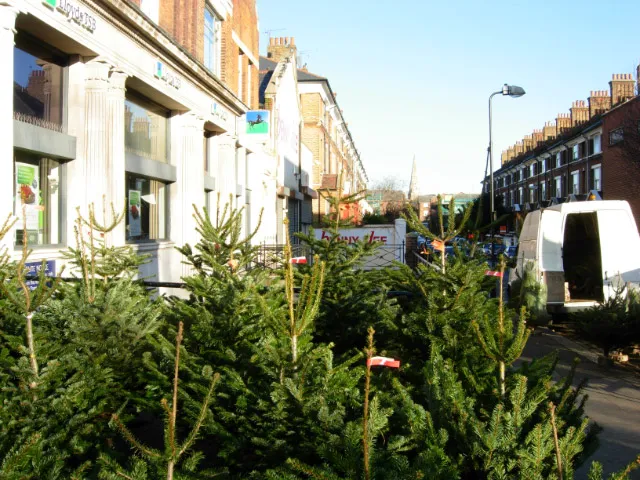
Photo: Stephen McKay, CC BY-SA 2.0, via Wikimedia Commons
By December 26, 2026, a real Christmas tree has usually crossed the line from holiday centerpiece to needle-shedding obstacle. The good news is that most US communities have a plan for that tree. The bad news is that the plan is local, seasonal, and picky about what it will accept. A tree in a plastic bag, a tree with tinsel still tucked into the branches, or a flocked tree from a big-box display can get turned away faster than you can say mulch.
This is the week to figure out the handoff. Not the week to leave the tree leaning against the garage until February.
Start with the tree, not the truck
First, confirm what you have. Real trees are the ones that get chipped, shredded, and turned into mulch. Artificial trees are not part of municipal tree recycling programs. They belong in the donation, reuse, or bulky-item stream, depending on condition and local rules.
Flocked trees are the tricky middle case. Flocking is the fake snow sprayed onto branches. Many programs reject flocked trees because the coating can contain chemicals and plastics that do not break down cleanly in mulch. A few communities accept them separately, but you have to ask. Do not assume.
Potted living trees are another ask-first item. Some programs accept them if the root ball is clean and the pot is removed. Others do not want soil or pots in the chipper. Wreaths and garlands are usually a no because they often contain wire, fake berries, ribbon, or foam. Keep them out of the tree pile unless your city explicitly says otherwise.
The three things that get trees rejected
Most rejection stories come down to three problems.
- The tree is bagged. Plastic bags wrap around chipping equipment and contaminate mulch. Leave the tree loose.
- The tree is decorated. Lights, ornaments, tinsel, garland, hooks, and nails all have to come off. Tinsel is especially bad because it shreds into tiny pieces that are hard to screen out.
- The tree is not a tree. Stands, pots, wreaths, and artificial branches do not belong in a tree recycling drop-off.
There are smaller issues, too. Some curbside programs have length limits. Some drop-off sites close when their containers fill. Some require proof that you live in the city or county paying for the service. A little checking saves a lot of circling.
Curbside pickup: read the calendar, not the vibe
If your city offers curbside tree collection, it usually runs during a specific window in late December and January. Put the tree out on the correct day, not whenever the needles start dropping. Most programs want the tree at the curb by a certain morning time, and many will not pick up trees set out after the window closes.
Check the size rule before you drag anything outside. Some haulers take trees up to a certain height. Others want trees cut in half. Snow and ice can delay collection, so do not panic if the truck is a day late. Do panic a little if you left the tree in a bag.
Drop-off sites: the January window is real
Municipal drop-off sites often include parks, fairgrounds, transfer stations, and temporary lots. Some are staffed, some are self-serve, and some operate only on certain weekends. The best ones publish hours, accepted materials, and a phone number. The worst ones are a locked gate and a sign that says closed.
Go during posted hours. Do not leave a tree at a closed gate. That turns a recycling program into illegal dumping, and it can get the site shut down for everyone else.
The 2026 drop-off checklist
Before you load the tree, run through this list.
- Search your city or county solid waste page for Christmas tree recycling 2026. Look for the official page, not a random event listing.
- Confirm that the program accepts real trees only.
- Ask whether flocked trees are accepted. If the answer is vague, assume no.
- Remove the stand, lights, ornaments, tinsel, garland, nails, and any tree bag.
- Check whether the tree must be cut to a certain length.
- Confirm curbside dates or drop-off hours.
- Check residency requirements and any fee.
- Ask about wreaths, garlands, and potted trees if you have them.
- Bring a tarp or rope so the tree does not slide around on the drive.
- Go during staffed hours if you have questions or a nonstandard tree.
What actually happens to the tree
Most municipal programs chip trees into mulch. That mulch may go to parks, landscaping projects, erosion control, or a free pile for residents. Some programs give it away; others use it on public land. The key is contamination. A clean load of trees becomes a useful product. A load full of tinsel, plastic bags, and flocked trees becomes a disposal problem.
That is why the rules are strict. One bagged tree can wrap around equipment. One flocked tree can send a batch of mulch to the landfill. The program is not being fussy for fun.
Mistakes that cost you a second trip
Do not burn the tree in a fireplace or wood stove. Christmas trees are resinous and can contribute to creosote buildup. Do not toss it in the regular trash if your city has a separate tree program. Do not assume an artificial tree can go in the mulch pile. Do not wait until March and then wonder why the drop-off site is gone.
Apartment dwellers without curbside yard waste service should look for a drop-off site first. A neighbor with a truck is helpful, but the tree still has to meet the same rules.
A real tree is a seasonal product, and it has a seasonal exit. Find the 2026 drop-off, strip it down, and keep it loose. Your tree gets a second life as mulch, and your curb does not become a needle museum.