Boxed In: The Pre-Black Friday Cardboard Plan for Households With No Garage Left
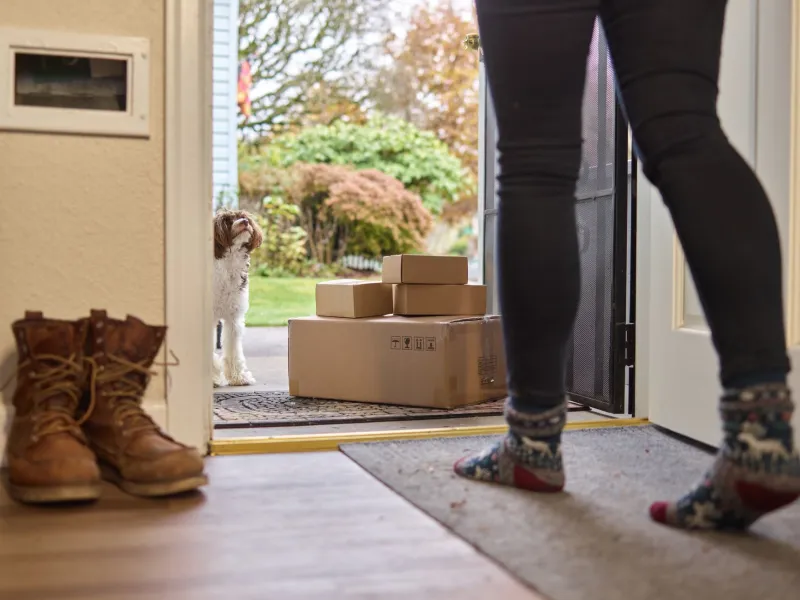
Black Friday lands on November 27 this year, and Cyber Monday follows three days later. Which means that somewhere around December 1, a whole lot of American porches are going to look like a cardboard landfill with a doormat buried underneath. If you have a garage, you'll shove the pile in there and deal with it in March. If you don't — apartment dwellers, townhouse folks, anyone whose "storage" is a hallway closet — the pile becomes furniture by the second week of December.
So let's do this the other way around. Instead of writing a post-holiday cleanup guide, here's a plan you can set up now, before the first box shows up, so the avalanche never gets a chance to bury you.
The real reason the pile grows so fast
Delivery boxes are built for the truck, not for your recycling bin. Retailers ship small items in boxes sized for the shipping network, not the product, which is why a phone case arrives in a carton that could hold a microwave. Add void fill, an inner box, and a padded mailer, and a single order can produce four separate pieces of packaging — three of which have different disposal rules.
That mismatch is what wrecks people. The cardboard itself is genuinely recyclable. It's the tape, the foam, the plastic film, and the sheer volume that turn an easy chore into a driveway standoff.
Rule one: break it down the day it arrives
Unflattened boxes are the enemy. They take up six times the space, they hide each other, and once they're stacked in a corner, nobody wants to deal with them. Flatten each one within an hour of emptying it. It takes forty seconds and it's the entire ballgame.
A few things that make it easier:
- Cut the tape seam, don't fight it. One slice down the middle of the top seam and one along the bottom edge and the box folds flat on its own.
- Peel the label if it comes easily. Most paper labels are fine to leave; nobody at the sorting facility is reading your address.
- Keep a box cutter where you open packages. Not in a drawer. On a hook by the door. A dull kitchen knife is how people end up in urgent care the week before Christmas.
- Stack flat boxes between the recycling cart and the wall, not in front of the door. You want them out of the traffic path but still visible, so you remember they exist.
The tape question, settled
You'll see conflicting advice on packing tape, and both sides are partly right. Most curbside programs accept small amounts of tape attached to cardboard — the repulping process screens it out. But heavy tape loads, and especially the fiber-reinforced strapping tape, can jam equipment and lower the value of the bale.
Practical answer: peel what peels in under five seconds, leave the rest. Don't spend twenty minutes scraping adhesive off a box. If your hauler publishes a rule saying tape is fine, believe them. If your city says remove it, remove the easy strips and don't agonize over the stubborn ones.
What absolutely does not go in the cardboard stream
This is where contamination tickets come from. Set these aside as you unpack:
- Polystyrene foam blocks and molded inserts. Not accepted in curbside carts anywhere in the US. Some recycling centers take clean foam at a dedicated drop-off; otherwise it's trash. Packing peanuts go back to any shipping store — UPS and FedEx locations usually accept them for reuse.
- Air pillows and bubble wrap. Plastic film. Grocery and big-box store drop-off bins take these, along with poly mailers and plastic Amazon envelopes.
- Padded paper mailers. Mixed material — paper outside, bubble inside. Usually trash.
- Wet or greasy cardboard. Once it's soaked through, it's not worth the fuel to haul. Compost it if you have a pile; otherwise trash.
- Anything food-stained. The pizza box rule applies here too: clean lid, greasy bottom.
When the box is simply too big
Appliance cartons, furniture boxes, and the occasional shipping crate for a piece of gym equipment will never fit in a standard 96-gallon cart, and most haulers won't take them curbside no matter how neatly you fold them. Two options:
- Cut it down. A utility knife turns any box into bin-sized pieces in about five minutes. Score, fold, repeat. Just do it on a hard surface with the blade pointing away from your body.
- Haul it in. Most municipal recycling centers and transfer stations accept cardboard by the truckload, often free for residents. Bring it flattened, stacked, and tied with twine so it doesn't become a kite in the lot. Check the center's hours before you go — a lot of them close early on Saturdays and take Thanksgiving week off entirely.
One caveat: many centers restrict loads to household material. If you're a reseller cleaning up after a busy week, call ahead and ask what their commercial threshold is.
Load the car like you actually want to unload it
Flattened boxes behave like sails. Nest them smallest-to-largest, lay them flat, and strap or weight them down. If rain is in the forecast, throw a tarp in the trunk — soggy cardboard gets rejected at the gate and turns your back seat into papier-mâché. And leave the rear window clear; a trunk full of boxes stacked to the ceiling is a genuinely bad way to merge onto a highway.
The two-minute weekly reset
Cardboard is the one recycling stream where a small habit beats a big cleanup every time. Pick a spot — behind the door, beside the cart, the sliver of wall between the fridge and the counter. Every time a box comes in, it gets opened, emptied, flattened, and added to the stack. Once a week, the stack goes out or into the car.
Do that between now and the end of December and you'll never once have to explain to a guest why there's a box fort in the living room. If you're not sure where your nearest drop-off is, or whether your city takes oversized cardboard at the curb, start with our recycling center directory and confirm the rules before you load the trunk.