The 48-Hour Garage Sale Purge: A Directory for Everything That Didn't Sell
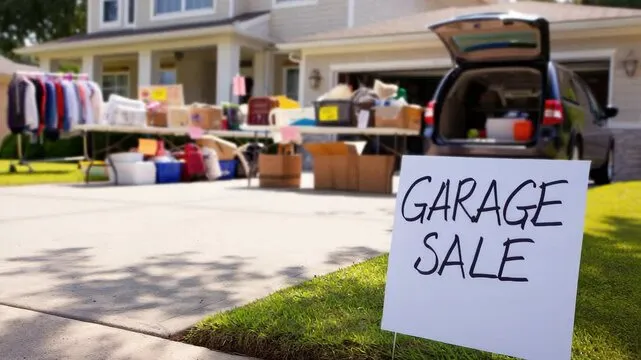
Photo: unsold garage sale items boxed up in driveway after sale, via t3.ftcdn.net
Every garage sale ends the same way. The morning started with a folding table full of optimism; by 3 p.m., you're staring at the same table with a thin layer of cash and a mountain of unsold inventory. The temptation is to shove it all back in the garage and forget about it until next spring. Resist that urge. Most of what didn't sell has a legitimate next stop — you just need to know which one.
Here's your 48-hour action plan, sorted by category.
Sunday Evening: The Clothing and Textile Roundup
Clothes are the easiest win. Bag up anything wearable and drop it at a thrift store like Goodwill or a local shelter or church collection bin. Items too worn for donation — stained tees, mismatched socks, threadbare towels — still have value: textile recyclers and many donation bins accept them as rags and fiber feed material. The rule of thumb: if it's dry and not soaked in something hazardous, it can go in a textile bin. Just don't put fabric in your curbside cart; it tangles sorting equipment.
Monday Morning: Books, Toys, and Furniture
- Books: Libraries, Little Free Libraries, and used bookstores take clean, current titles. Damaged paperbacks can often go in curbside paper recycling once covers are removed — check local rules.
- Toys: Daycares, family shelters, and toy libraries accept complete, safe sets. Anything with broken plastic parts belongs with a plastics drop-off if your area accepts rigid plastics.
- Furniture: Habitat for Humanity ReStores and local furniture banks pick up large items in decent shape. Upholstered pieces in rough condition may qualify for bulk pickup — never a curbside bin.
Monday Afternoon: The Electronics and Metal Pile
That box of dead remotes, tangled chargers, old monitors, and the treadmill nobody bought? This is where specialty recyclers earn their keep.
- Electronics: Retailer take-back programs and dedicated e-waste recyclers handle TVs, computers, and small gadgets. Many states — including New York, Washington, and Texas — run e-waste programs that make this free or cheap.
- Power tools and exercise equipment: Scrap yards pay by weight for metal. An old treadmill can actually put a few dollars back in your pocket.
- Appliances: Utilities sometimes offer rebate pickup for working fridges and freezers — worth a phone call before anything else.
The Pile That Needs Its Own Rules: Hazardous Materials
Garage sales have a funny way of surfacing the stuff nobody should ever sell: half-cans of paint, old motor oil, a rusted propane tank, that bottle of pool chemicals from the previous homeowners.
None of these belong in the trash, the recycling bin, or a donation box. They belong at a household hazardous waste (HHW) facility or a seasonal community collection event, both of which most counties offer for free to residents. Typical HHW-eligible items include:
- Paint, stains, and solvents
- Motor oil, antifreeze, and automotive fluids
- Batteries of all chemistries
- Propane tanks and lighter fluid
- Pesticides, fertilizers, and pool chemicals
Many auto parts stores also accept used motor oil and car batteries year-round, which saves you a trip to the HHW site.
The Final Sweep: Consignment and Buyback Options
If you have a few higher-value leftovers — brand-name clothing, jewelry, collectibles, unopened toys — a consignment shop or online buyback service can turn them into real money rather than a tax-deduction receipt. Consignment stores typically keep a percentage of the sale, but the item leaves your garage for good, which is the real goal.
Why the 48-Hour Window Matters
Give it a week and the boxes quietly migrate back to the shelves. Move fast, load the car once, and hit three or four stops in a single loop: thrift store, e-waste recycler, scrap yard, HHW facility. By Tuesday, your driveway is clear, your garage is lighter, and every item landed where it could do the most good — instead of the landfill.