Dead Bulbs, Live Wires: A Sane Send-Off for Holiday Light Strands
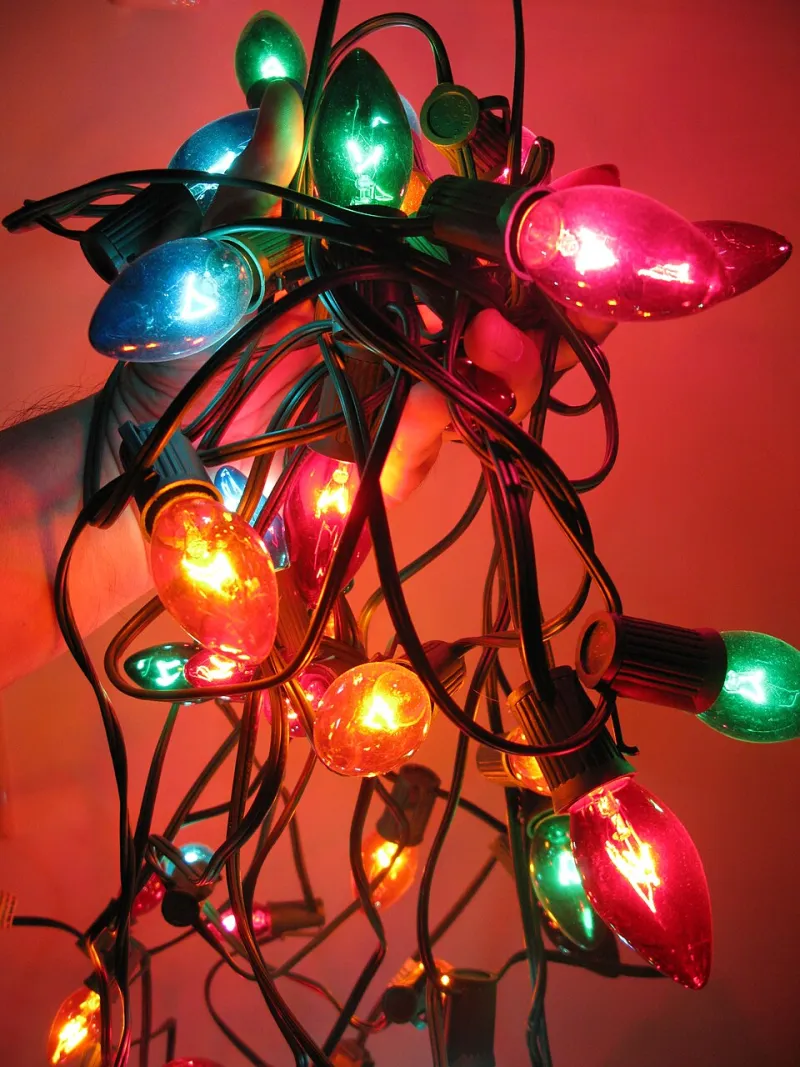
Photo: frankieleon, CC BY 2.0, via Wikimedia Commons
Every November, a familiar box appears in the garage: a nest of holiday string lights that are dead, half-lit, or so badly knotted that plugging them in feels like a dare. Before the decorating season gets busy, deal with that box. The good news is that holiday lights are recyclable in many places. The bad news is that they are not ordinary curbside recycling, and a tangled strand can turn into a headache for an entire sorting facility.
Why the blue bin is the wrong chute
String lights are a classic tangler. At a recycling center, loose wire can wrap around sorting discs and conveyor belts, forcing workers to stop the line and cut it free. The plastic coating, tiny bulbs, and occasional battery pack do not help. Even though the wire contains metal, most curbside programs are set up for cans, bottles, paper, and cardboard, not low-grade insulated wire.
That means the strand should not go in your household recycling bin. It also should not be stuffed into a paper bag and hidden in the bin like a surprise. If your only local option is the trash, that is a last resort, not the default. The better move is to find a dedicated drop-off that actually wants holiday lights.
What recyclers actually recover
The payoff is in the wire. Holiday light strands typically contain copper or aluminum conductors wrapped in plastic insulation. A recycler can strip, shred, or otherwise process those strands to recover metals and sometimes the plastic. LED strands add small electronic components, which is why some e-waste recyclers and specialty programs accept them alongside old chargers and cords.
The value is real, but it is not huge per strand. The labor is in handling the mess. That is why many programs prefer lights collected in bulk from retail bins or municipal drives rather than one giant knot handed across a counter. Your job is to make the strand easy to handle, not to turn the recycling center into a knot-removal service.
Where the strands can go
Start with seasonal retail collection. Home improvement stores, hardware stores, and some big-box retailers commonly run holiday light recycling bins from late November into early January. Programs change by store and by year, so call or check the store website before you load the car. Ask a simple question: are you collecting string lights right now, and do the bulbs need to be removed?
Municipal programs are the other big option. County recycling centers, solid waste districts, and city public works departments often host holiday light drop-offs during the season. Some collect them for free. Some partner with a scrap processor. Some offer a small coupon or prize draw. Again, verify the details for this season rather than assuming last year's bin is back in the same spot.
Scrap yards can be an option, especially if you have a large batch. Call first and ask whether they take low-grade insulated wire or holiday light strands. Some yards buy wire by weight. Others will take it but may not pay for consumer-sized quantities. Specialty mail-back recyclers also exist for small batches, though shipping costs may be more than the material is worth. The point is keeping the wire in the recycling stream, not getting rich on old tinsel-era lights.
Prep the strand without creating a side quest
A little prep goes a long way. Follow the drop-off program's rules first, because they vary. Some accept whole strands with bulbs attached. Some ask you to remove bulbs. Some want lights separated from extension cords and battery packs. A quick call saves a wasted trip.
1. Test and sort
Plug in the strands before you bag them. Working lights can be donated, passed along, or kept as spares. Dead and half-lit strands are recycling candidates. If a strand has a battery pack, remove the batteries and handle them through a battery drop-off. Do not send batteries into a light recycling bin.
2. Rough-detangle, do not untangle a masterpiece
Pull one end free and wrap the strand loosely around your hand or a piece of cardboard with notches. Work out the easy loops. If you hit a knot that would take an hour and a pair of needle-nose pliers, stop. Recycle the strand as-is if the program accepts it. Do not cut the wire unless the drop-off specifically allows cut strands. If the lights are going to a donation or reuse program, keep the strand intact.
3. Coil and secure
Make loose loops about the length of your forearm. Secure the coil with a twist tie, zip tie, or a bit of masking tape. Put the coil in a bag or box labeled 'string lights' so it does not get mixed with batteries, bulbs, or random cords. Keep it separate from your regular recyclables until you reach the drop-off.
The quick pre-drop checklist
- Confirm the location is collecting holiday lights this season.
- Ask whether bulbs, battery packs, and connectors stay on or come off.
- Remove batteries and keep them out of the light bin.
- Coil strands loosely and secure them so they do not explode into a nest in transit.
- Keep lights separate from extension cords unless the program says otherwise.
- Skip the packaging. Leave the store bag and cardboard at home if the bin does not accept them.
The garage shelf thanks you
The holiday light problem is a small one, but it is a good test of a recycling routine. Curbside bins are not built for tanglers. Dedicated drop-offs are. A few minutes of sorting and coiling can keep copper out of the landfill and keep a messy knot out of a sorting facility. Clear the box now, before the season gets busy, and you will have one less ghost of holidays past waiting in the garage.